
Salisbury Bat Night Discoveries
Written by Polly, October 2025
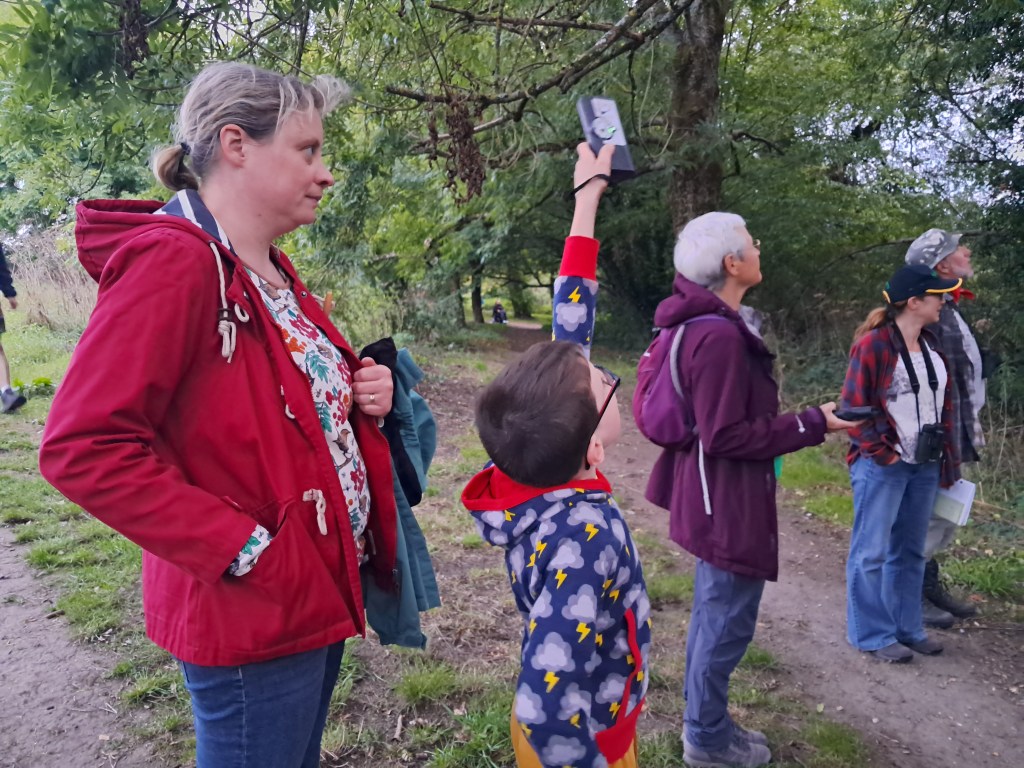
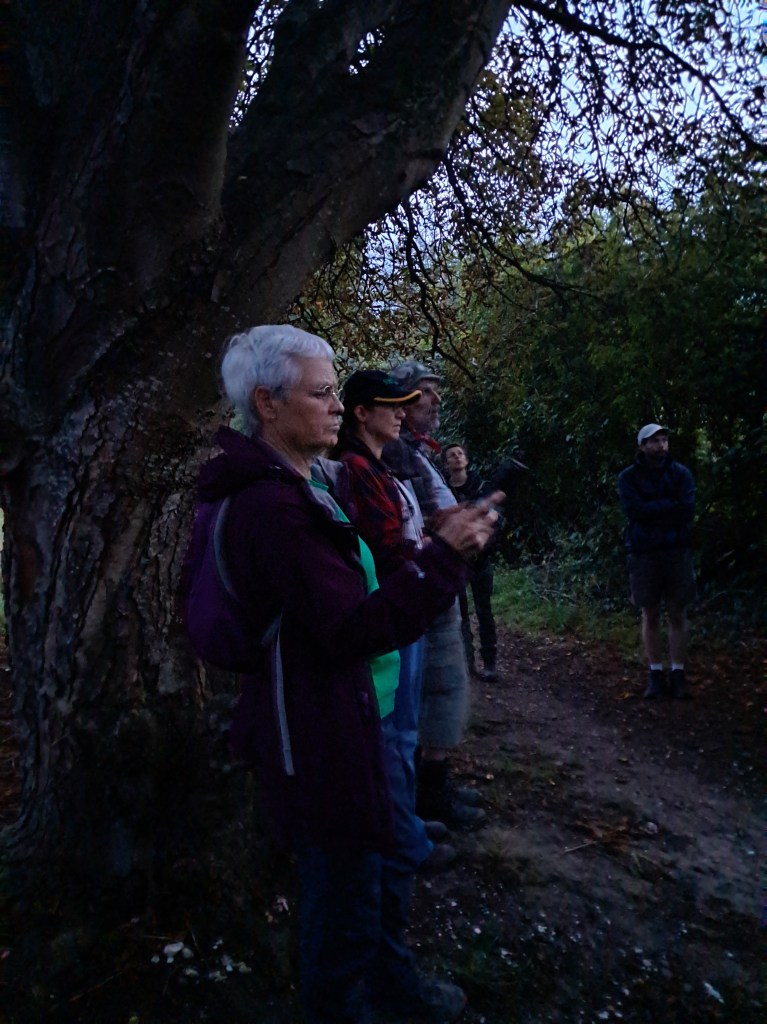
Our most popular events in 2025 were the bat nights. Each event started with an introductory talk about bats, instructions on how to use a bat detector and then we explored a greenspace in Salisbury looking and listening out for bats as we went.
Some Bat Facts!
- Bats are the only flying mammals found in the world
- 17 different species of bat live and breed in the UK – that’s almost a quarter of our mammal species.
- Bats eyesight is similar to humans, but they have much better hearing
- A common pipistrelle bat weighs 5g on average – the same weight as half a jaffa cake!
- Bats hibernate in the winter, but they may leave their roost on warmer nights to find food and water
- Bats roost in the UK in trees (sometimes behind loose bark and ivy), buildings, caves, bridges and mines.
- Bat wings are structurally similar to human hands. The wing is a flexible skin membrane that stretches between digits 2 to 5.
- In the UK, bat populations have declined considerably over the last century due to habitat destruction and fragmentation and developments affecting roosting sites.
- All bat species in the UK are protected by law, making it illegal to disturb a bat or its roost.
When and where to see bats?
Bats hibernate in the colder months of the year. They start emerging around dusk as temperatures warm up. May to September are the best months to see bats flying and foraging for insects. The first half-hour after sunset is when you’re most likely to see them emerge from their roosts.
In the UK, bats are found around woodlands, rivers, buildings and caves. The best places to look for them include parks, tree-lined waterways and woodlands. See the table below of where we saw bats in Salisbury this summer.

What is echolocation?
Bat echolocation is like sonar – the bats make high-frequency sounds and listen to the returning echoes to detect their environment, navigate and locate prey. Humans cannot usually hear bat echolocation because the calls are in the ultrasonic range above human hearing, but some children and young adults with good hearing might perceive the lower frequencies of certain species’ calls. We can use a bat detector to transform the echolocation calls to a frequency that we can hear. Different bats echolocate at different frequencies and with different rhythms. A bat detector can help us identify different species of bat.
If you’d like to join one of our bat nights next year, do sign up to our newsletter to find out when our events are running.
Bat species recorded at different greenspaces in Salisbury in 2025
| Avon Valley Nature Reserve | Bemerton Folly | Victoria Park | Queen Elizabeth Gardens | Churchill Gardens | |
| Common Pipistrelle | ✔️ | ✔️ | ✔️ | ||
| Soprano Pipistrelle | ✔️ | ✔️ | ✔️ | ✔️ | ✔️ |
| Leisler’s | ✔️ | ✔️ | ✔️ | ✔️ | ✔️ |
| Daubenton’s | ✔️ | ||||
| Noctule | ✔️ | ✔️ | ✔️ | ✔️ | |
| Serotine | ✔️ | ✔️ | ✔️ | ✔️ | |
| Brown long eared | ✔️ | ||||
| Nathusius’ Pipistrelle | ✔️ |
 waw.org.uk